TEACHING POETRY & AMERICAN ART

  • Introduction
    • Why Poetry and American Art?
    • Strategies
    • Disclaimer
    • About Me
  • Romanticism
    • Intro to American Romanticism (1820-1900)
    • John James Audubon
    • Thomas Cole
    • Asher Durand
    • Daniel Chester French
    • Winslow Homer
    • Albert Pinkham Ryder
    • Augustus Saint-Gaudens
    • "Illuminated Gems of Sacred Poetry"
    • "Indian Summer: Autumn Poems and Sketches"
  • Realism / Social Realism
    • Realism >
      • Intro to Realism (1900-1920)
      • George Bellows
      • Edwin Dawes
      • Thomas Eakins
      • Edward Hopper
      • Thomas Hovenden
      • John Sloan
    • Social Realism >
      • Intro to Social Realism (1920-1940)
      • Walker Evans
      • Dorothea Lange
      • Ben Shahn
  • Regionalism
    • Intro to Regionalism (1920-1940)
    • Thomas Hart Benton
    • Maynard Dixon
    • Grant Wood
  • Modernism
    • Intro to Modernism (1910-1940)
    • Stuart Davis
    • Charles Demuth
    • Marsden Hartley
    • Georgia O'Keeffe
  • Harlem Renaissance
    • Intro to Harlem Renaissance (1920-1940)
    • Aaron Douglas
    • Meta Warrick Fuller
    • Jacob Lawrence
    • Faith Ringgold
    • Carl Van Vechten
    • Hale Woodruff
  • Abstract Expressionism
    • Intro to Abstract Expressionism / New York School (1940-1960)
    • Morris Graves
    • Red Grooms
    • Philip Guston
    • Grace Hartigan
    • Kenneth Patchen
    • Dorothea Tanning
    • Walasse Ting
    • Cy Twombly
  • Postmodern/Contemporary
    • Intro to Postmodern / Contemporary Art (1950-present)
    • Visual Poetry
    • Louise Bourgeois
    • Joseph Goldyne
    • Elizabeth Murray
    • Jeff Schlanger
    • Kiki Smith
    • Jaune Q. Smith
  • More Resources
  • Introduction
    • Why Poetry and American Art?
    • Strategies
    • Disclaimer
    • About Me
  • Romanticism
    • Intro to American Romanticism (1820-1900)
    • John James Audubon
    • Thomas Cole
    • Asher Durand
    • Daniel Chester French
    • Winslow Homer
    • Albert Pinkham Ryder
    • Augustus Saint-Gaudens
    • "Illuminated Gems of Sacred Poetry"
    • "Indian Summer: Autumn Poems and Sketches"
  • Realism / Social Realism
    • Realism >
      • Intro to Realism (1900-1920)
      • George Bellows
      • Edwin Dawes
      • Thomas Eakins
      • Edward Hopper
      • Thomas Hovenden
      • John Sloan
    • Social Realism >
      • Intro to Social Realism (1920-1940)
      • Walker Evans
      • Dorothea Lange
      • Ben Shahn
  • Regionalism
    • Intro to Regionalism (1920-1940)
    • Thomas Hart Benton
    • Maynard Dixon
    • Grant Wood
  • Modernism
    • Intro to Modernism (1910-1940)
    • Stuart Davis
    • Charles Demuth
    • Marsden Hartley
    • Georgia O'Keeffe
  • Harlem Renaissance
    • Intro to Harlem Renaissance (1920-1940)
    • Aaron Douglas
    • Meta Warrick Fuller
    • Jacob Lawrence
    • Faith Ringgold
    • Carl Van Vechten
    • Hale Woodruff
  • Abstract Expressionism
    • Intro to Abstract Expressionism / New York School (1940-1960)
    • Morris Graves
    • Red Grooms
    • Philip Guston
    • Grace Hartigan
    • Kenneth Patchen
    • Dorothea Tanning
    • Walasse Ting
    • Cy Twombly
  • Postmodern/Contemporary
    • Intro to Postmodern / Contemporary Art (1950-present)
    • Visual Poetry
    • Louise Bourgeois
    • Joseph Goldyne
    • Elizabeth Murray
    • Jeff Schlanger
    • Kiki Smith
    • Jaune Q. Smith
  • More Resources

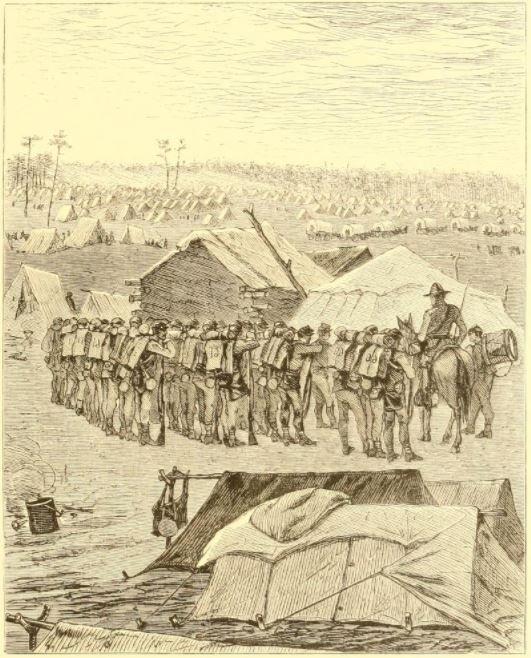
Bryant's Song of the Sower and Homer's Tented Field
Picture
Winslow Homer, "Tented Field" illustration from William Cullen Braynt's "Song of the Sower" (1871)

Discussion points / questions / activities
​
→ See the other Winslow Homer resource Homer's Bobbin Girl for the full text of Bryant's "Song of the Sower."

Homer's Tented Field illustrates this section of the poem:

III.

Fling wide the golden shower; we trust
The strength of armies to the dust.
This peaceful lea may haply yield
Its harvest for the tented field.
Ha! feel ye not your fingers thrill,
As o'er them, in the yellow grains,
Glide the warm drops of blood that fill,
For mortal strife, the warrior's veins;
...
​
  • Connect this section of the poem to the illustration. How do the two connect?
  • Notice the covered wagons in the background. Why are they there? What time period is illustrated?
  • Notice the military men and their tented field. How would you describe the men and their camp? 
  • Does this illustration express an opinion on war / military pursuits ? Does the poem? How can you tell?

Powered by Create your own unique website with customizable templates.